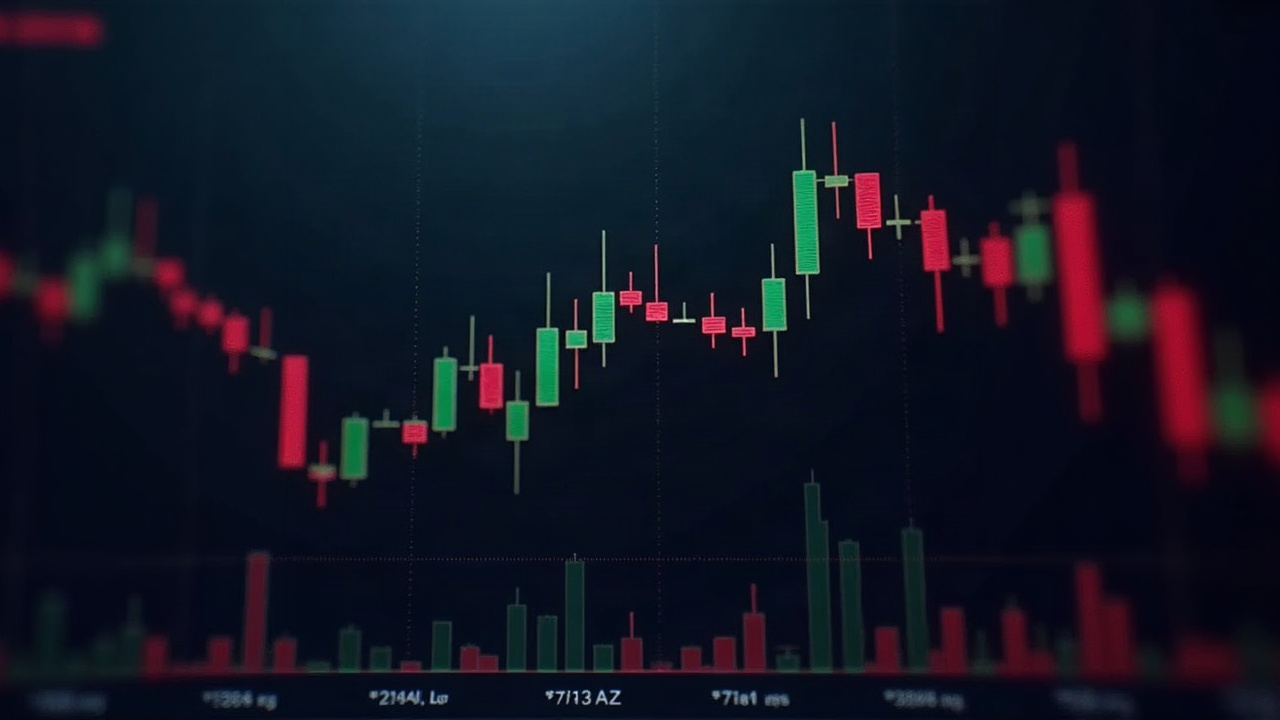
A crypto pump and dump is a coordinated market manipulation scheme where insiders accumulate a low-cap token cheaply, artificially inflate its price through coordinated buying and social media hype, then sell their holdings into retail demand — crashing the price to near zero. On BSC futures-only tokens, this scheme has evolved into a sophisticated operation involving leveraged derivatives, liquidation cascades, and market maker coordination.
Crypto pump and dump schemes have become the most prevalent form of coordinated market manipulation in cryptocurrency trading. A pump and dump operation involves insiders accumulating a token at low prices, artificially inflating its value through a combination of thin-liquidity manipulation and leveraged futures positioning, then selling their holdings into the resulting demand. Understanding how pump and dump works is essential for any cryptocurrency trader who wants to avoid becoming exit liquidity.
What "Pump and Dump" Actually Means
The term dates back to penny stock fraud in traditional markets. In crypto, the mechanics are the same but executed faster and with more leverage. A pump and dump has three actors:
- Operators (insiders): They accumulate the token before the pump. They control 30-56% of the float through a few wallets.
- Market makers: Firms like Wintermute provide liquidity and help with distribution — they earn from the spread.
- Retail traders: They enter during the hype phase, often using leverage, and become exit liquidity for the operators.
The Four Phases of a Crypto Pump and Dump
Phase 1: Accumulation
Insiders quietly buy the token over days or weeks while the price is low. On BSC, this means acquiring tokens on thin DEX pools (PancakeSwap, MDEX) and small CEX listings. The key signature: wallet concentration rising without price impact. 1-3 addresses accumulate 40-56% of the circulating supply.
Phase 2: Markup (The Pump)
The price is driven up rapidly. On a futures-only token, this works through a specific mechanism:
- Operators buy on thin spot markets (MEXC, Gate.io) — a few hundred thousand dollars creates a 20-50% move
- The spot price spike triggers short liquidations on Binance Futures — the exchange force-buys to close shorts
- Each liquidation pushes the price higher, triggering more liquidations — a cascade
- Social media hype and Telegram groups amplify retail FOMO — more leveraged longs pile in
- The price goes vertical: +100% to +500% in days
Why futures-only? If the token had a deep Binance spot order book, manipulators would need 10-100× more capital to move the price. The absence of Binance spot is intentional — it keeps the spot side thin and controllable.
Phase 3: Distribution
Operators sell their holdings into the hype. On-chain, you see:
- Token flows from insider wallets → CEX hot wallets (Binance, MEXC, Bitget deposit addresses)
- Market maker (Wintermute, etc.) appears as counterparty — facilitating OTC or order book distribution
- Open interest remains high or rises (retail is still buying the top)
- Funding rate goes extremely positive (longs are paying shorts — the market is overheated)
Phase 4: Collapse (Dead)
With operators out, there is no more buying pressure. Price crashes 80-95% from peak. Long liquidation cascades accelerate the collapse. The token lingers on futures with negligible volume. The cycle is complete.
Real Pump and Dump Chart Pattern
A classic pump-and-dump chart shows:
- Flat accumulation base — weeks to months of low volume sideways
- Vertical spike — near-parabolic price increase over 3-14 days
- Sharp reversal — distribution begins at or near the top
- Staircase decline — each bounce is lower, volume fades
- Final floor — 90-95% below ATH, near zero liquidity
Example: SKYAI (BSC) — ATH $0.854, current ~$0.04 (−95%). Top-3 wallets held 50%+ of supply. Wintermute appeared as distributor. Classic futures-only pump-dump pattern.
How Much Money Is Involved?
For a typical BSC futures-only pump-dump:
| Metric | Typical Range |
|---|
| Spot liquidity on DEX | $50K - $500K |
| Capital needed to move price 20% | $50K - $200K |
| Open interest at peak | $5M - $50M |
| Insider profit (estimated) | $500K - $5M per cycle |
| Retail losses (liquidations) | Comparable to insider profit |
How to Detect a Pump and Dump Before It Happens
The ArbiScreen Pump & Dump Detector automates detection across all 111 BSC futures-only tokens. Key early warning signals:
- Wallet concentration rising — few addresses accumulating >30% supply
- OI increasing while price is flat — positioning is building before the move
- Funding rate near zero or slightly negative — the market is not yet overheated
- Low CEX holdings — tokens are on-chain, not yet moved to exchanges for selling
- Phase = Accumulation + Signal = ENTRY — the detector has identified the setup
ArbiScreen Tools
Detect Pump & Dumps Before They Play Out
The ArbiScreen scanner classifies all 111 BSC futures-only tokens into lifecycle phases with automated ENTRY/EXIT signals.
Open Pump-Dump Scanner →
Pump and Dump Examples in Crypto
Recent BSC futures-only examples that followed the pattern:
- SKYAI — ATH $0.854 → $0.04 (−95%). Gate.io cold wallet held 36% of supply. Wintermute as distributor.
- CLO — Classic markup phase: 7d +66%, OI +39%, followed by distribution and collapse.
- EVAA — 30d +348%, OI +286% at peak. Broke markup when 24h dropped −22% while 30d was still +30%.
Frequently Asked Questions
Is pump and dump illegal in crypto?▸
In most jurisdictions, securities fraud laws do not explicitly cover crypto assets (yet). The SEC has pursued some cases, and the EU MiCA regulation addresses market manipulation. However, enforcement remains limited, especially for BSC tokens. Detection tools help traders protect themselves regardless of legal status.
How long does a pump and dump cycle last?▸
On BSC futures-only tokens, the accumulation phase can last 2-8 weeks. The markup (pump) typically runs 3-14 days. Distribution may take 1-5 days. The entire cycle from start to dead phase is usually 1-3 months.
Can you profit from a pump and dump?▸
Some traders attempt to enter during accumulation and exit before distribution. This is extremely risky — timing the exit is the hardest part, and the collapse can be sudden. The ArbiScreen detector provides signals to help with timing, but no signal is guaranteed. Never risk more than you can afford to lose.