
MEXC is one of the most productive exchanges for crypto arbitrage — not because it's the biggest venue by volume, but because it lists more altcoins, lists them faster, and charges less to trade them than almost any rival. If Binance is the deep, efficient ocean where price gaps close in milliseconds, MEXC is the fast-moving river: thousands of fresh listings, thin order books, and prices that routinely drift away from the rest of the market before arbitrageurs close the gap.
Add a 0.05% spot taker fee and a 0.02% futures taker fee — roughly half of what most competitors charge — and you have a venue built for spot-spread arbitrage, cross-exchange plays, and cheap funding-rate carry. This guide covers everything a serious trader needs: the real fee structure, eight concrete strategies (including DEX-to-MEXC and stablecoin arbitrage), capital requirements and realistic returns, the MEXC API for automated bots, withdrawal traps that kill profitable trades, how MEXC compares to Binance, Bybit, OKX, KuCoin, Gate.io, Coinbase and HTX, and whether any of this is even legal.
Quick stats: 0.05% spot taker fee · 0.02% futures taker fee · 3,000+ listed tokens · ~$1 USDT withdrawal · founded 2018.
MEXC's role in the arbitrage ecosystem has shifted over the past year, and three changes matter if you're trading it now.
Listing pace accelerated. MEXC continues to onboard new tokens faster than almost any centralized exchange, frequently listing a coin days or weeks before it appears on Binance, OKX, or Coinbase. That first-listing window is where the widest, most persistent spot spreads show up — a token trading only on MEXC (or MEXC plus one or two smaller venues) has no arbitrage pressure pulling its price back toward a global consensus, so it can sit 5-15% away from where it "should" trade for hours.
API throughput improved. MEXC's REST and WebSocket infrastructure now handles higher request volumes with fewer rate-limit rejections than in prior years, which matters directly for anyone running a crypto arbitrage bot that needs to poll order books across a dozen exchanges simultaneously. Lower latency on the WebSocket feed also means less slippage between the moment a scanner flags a spread and the moment your order fills.
Fee structure held steady, competition didn't. While MEXC's headline fees (0.05% spot / 0.02% futures) haven't moved, Bybit, OKX, and Gate.io have all introduced more aggressive VIP tiers and fee-token discounts to compete for volume. MEXC still wins on listing breadth, but the fee gap against mid-tier competitors has narrowed slightly for high-volume traders who qualify for discount tiers elsewhere. For retail-sized arbitrage (sub-$50k per trade), MEXC's base-tier fees remain among the cheapest available without needing a native exchange token.
Net effect: MEXC is still the best hunting ground for fresh-listing spot arbitrage, but automated, API-driven strategies now have more room to work thanks to the infrastructure upgrades.
MEXC is a centralized exchange (CEX) founded in 2018 that has grown into one of the top venues globally by spot trading volume and new-listing share. For an arbitrage trader, the appeal is simple: more listed markets means more price gaps to exploit, and MEXC lists more cryptocurrency pairs than almost any competitor — from blue-chip BTC and ETH markets down to brand-new low-caps that haven't reached a second exchange yet.
That combination — deep, liquid BTC and major-coin markets sitting alongside thousands of thin altcoin pairs — is exactly what makes MEXC a favorite among crypto arbitrage traders and the scanners they rely on to watch it all in real time. Every extra listed token is one more market that can briefly misprice against the rest of the field, and one more potential opportunity for cross-exchange arbitrage.
Fees decide whether a spread is profit or a loss, so get the MEXC fees right before you trade. MEXC is deliberately cheap to attract volume:
Fees are always per-leg. Arbitrage requires two trades minimum — buy on one side, sell on the other. Even at MEXC's low 0.05% spot taker rate, that's 0.10% round-trip before you add withdrawal costs and network gas. The exchange's cheap fee schedule simply leaves more of the raw gap in your pocket; you still need to calculate the net profit before committing capital. Always model mexc trading fees against the gross spread you see on a scanner, not the headline percentage alone — a 0.3% spread that looks attractive on paper can evaporate once both legs' fees and a network transfer are subtracted.
MEXC-first tokens often trade at a meaningful premium or discount compared to the one or two other venues that list them. Buy the cheap side, sell the expensive side, and pocket the difference net of fees. This is the single highest-value strategy on MEXC specifically because of how fast it lists new tokens relative to competitors.
Compare a coin's MEXC price — usually a BTC- or USDT-quoted pair — against Binance, OKX, or Bybit. Thin MEXC order books drift more than deep ones, creating cross-exchange arbitrage spreads you can capture by holding pre-funded balances on both sides and executing both legs quickly.
With a 0.02% futures taker fee, MEXC perpetual contracts are cheap to hold open, which makes them well suited to delta-neutral funding trades: go long spot (or short futures) on one leg and the opposite on the other, collecting the funding rate payment while price exposure cancels out. When the funding rate diverges between MEXC and another exchange, the carry trade becomes even more attractive. See the full funding-rate arbitrage guide for the mechanics.
MEXC's enormous pair list occasionally produces triangular loops — buying A with USDT, trading A for B, then B back to USDT — that net a small edge without ever leaving the exchange. These are usually fast-closing and best suited to bots. Full breakdown in our triangular arbitrage guide.
When a token trades both on a decentralized exchange (DEX) — say, on Ethereum or BSC via Uniswap or PancakeSwap — and on MEXC, the two venues frequently disagree on price, especially right after a new listing or a large on-chain swap moves the DEX pool. The play: buy the cheap side (often the DEX pool, where a large trade can move price significantly due to lower liquidity), bridge or transfer the token to MEXC, and sell into the CEX order book — or the reverse. Example: a newly listed token launches on a DEX at $0.012, gets listed on MEXC two days later, and MEXC's early order book prices it at $0.015 due to buy pressure from traders who can't yet access the DEX pool easily. That 25% gap, minus bridging gas, DEX slippage, and MEXC's 0.05% taker fee, can still leave a substantial net return — but only if you can move the asset between chains fast enough before the gap closes. This strategy carries more execution risk than pure CEX-to-CEX arbitrage because of bridge delays and on-chain gas volatility, so size positions conservatively until you've tested the round-trip timing.
Stablecoins (USDT, USDC, FDUSD) occasionally depeg by small amounts — a few basis points to a few percent during stress events — and MEXC's stablecoin pairs don't always re-align with the broader market at the same speed as Binance or Coinbase. When USDT trades at $0.998 on MEXC against USDC while it's at $0.9995 elsewhere, you can buy the underpriced stablecoin on MEXC and sell it on a venue where it's trading closer to par, or route through a DEX stablecoin pool. This is lower-risk than altcoin arbitrage (you're not exposed to a volatile asset while in transit) but the spreads are also much thinner — typically 0.05%-0.3% — so it only works at scale or with near-zero fees. It's a useful strategy for parking idle capital productively between larger altcoin trades rather than a primary income source.
Cross-exchange arbitrage execution flow
Realistic numbers matter more than hype here. A workable starting point for MEXC spot-spread arbitrage is $500-$1,000 in trading capital split across both exchanges you're arbitraging between — enough to clear minimum order sizes on both legs with room to spare for fees and slippage. Below that, exchange minimums and fixed withdrawal costs (that $1 USDT network fee, for instance) eat a disproportionate share of each trade.
On fresh-listing spot spreads, experienced traders commonly target 1-3% net return per executed trade, with opportunities appearing anywhere from several times a day to a few times a week depending on how active the new-listing pipeline is. That is not 1-3% daily on your whole balance — it's 1-3% per individual trade when a genuine gap appears and you can execute both legs before it closes. Funding-rate carry strategies are steadier but smaller: typically 0.01%-0.05% per funding interval (every 8 hours on most perpetuals), which compounds to a modest but consistent annualized return with much lower variance than chasing spot spreads.
Returns scale with capital up to a point, then run into liquidity limits. A $1,000 account can comfortably work micro-cap spreads that a $100,000 account would simply blow through the order book trying to fill — at larger size, you need to shift toward major-pair arbitrage and funding carry, where depth supports bigger positions even though the per-trade percentage is smaller. Treat any "guaranteed daily return" claim with suspicion; genuine arbitrage profit depends entirely on spreads existing at the moment you're watching, not on a fixed schedule.
Manual arbitrage works for occasional opportunities, but MEXC's thousands of pairs are impossible to watch by hand — which is why most serious traders either use a scanner or build directly against the API.
REST API covers account management, order placement, and historical data, with standard endpoints for spot and futures markets. Order types supported include limit, market, and stop-limit, which is enough to implement most arbitrage execution logic without needing exotic order constructs.
WebSocket feeds stream real-time order book depth, trade ticks, and account updates — essential for arbitrage because REST polling alone introduces latency that can turn a visible spread into a missed one by the time your order lands. A bot watching MEXC against two or three other exchanges should subscribe to depth-of-book WebSocket channels on all venues simultaneously rather than polling REST endpoints on a timer.
Rate limits apply per endpoint and are enforced more consistently than in MEXC's earlier years, so a well-behaved bot needs to respect published limits and implement backoff on 429 responses rather than hammering the API — a rate-limited or banned API key is far worse than a slightly slower polling interval.
Practical note for anyone coding this themselves: authenticate with API key + secret for private endpoints (orders, balances), keep withdrawal permissions disabled on any key used purely for market-making or arbitrage execution unless your bot genuinely needs to move funds, and test order logic extensively on small sizes before scaling up. A single bug in order-sizing logic across thousands of thin-liquidity pairs can produce large unintended fills fast.
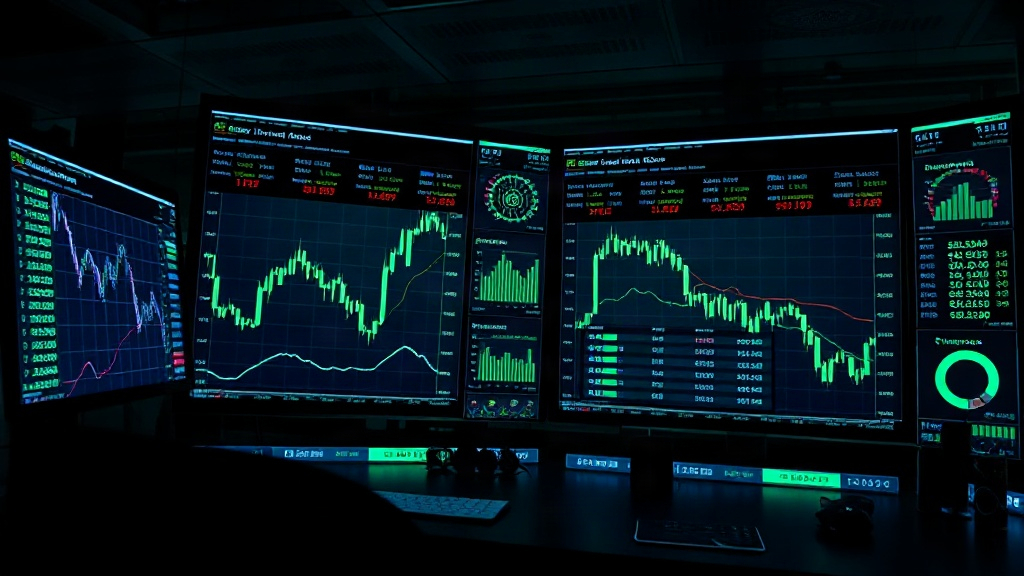
Live MEXC arbitrage spreads in the ArbiScreen scanner
Yes — crypto arbitrage itself is legal in virtually every jurisdiction that permits cryptocurrency trading, including the US, Canada, the UK, and the EU. Arbitrage is simply buying an asset on one market and selling it on another to capture a price difference; it's a standard, long-established trading practice in traditional finance (equities, forex, commodities) long before crypto existed, and regulators generally don't treat it differently in crypto markets. It isn't market manipulation, isn't insider trading, and doesn't require special licensing for an individual trading their own funds.
What does matter legally: your tax obligations (arbitrage profits are generally taxable events in most jurisdictions, often on every trade, not just when you cash out to fiat), MEXC's own availability and KYC requirements in your country or state (regulatory status varies and has shifted over time in some regions, so confirm current access before depositing funds), and standard exchange terms of service around automated trading and bot usage, which most major exchanges explicitly permit within their API rate limits. If you're running a arbitrage scanner or bot as a business rather than personal trading, consult a tax professional about reporting requirements — that's a compliance question, not a legality-of-arbitrage question.
MEXC withdrawal costs matter more here than on most exchanges. Because it lists so many tokens, some have only one available withdrawal network, an occasionally suspended MEXC withdrawal, or a high on-chain fee that eats a thin spread entirely. Before committing to a cross-exchange trade, always confirm: is the coin withdrawable right now, on a network the destination exchange actually accepts, at a fee small enough to keep the spread profitable? A gap you can't settle isn't a real opportunity — it's a paper profit.
Pre-verify before you buy. The classic beginner mistake is buying a cheap altcoin on MEXC, then discovering withdrawals are paused or only available on a chain your destination exchange doesn't support. Check MEXC's withdrawal status page for the specific asset before entering any position that depends on moving it off the exchange.
The pattern is consistent: MEXC wins on fees and listing breadth, the majors win on liquidity and execution certainty, and Coinbase — while useful as a compliant US fiat gateway — is generally too expensive on fees for active arbitrage compared to the rest of this list. Many arbitrageurs use MEXC as the "discovery" venue for fresh gaps and pair it with a deeper-liquidity exchange as the other leg. See the dedicated breakdowns for Binance arbitrage, Bybit arbitrage, OKX arbitrage, and KuCoin arbitrage for exchange-specific detail. If you're weighing MEXC vs Binance specifically: Binance offers tighter spreads and deeper books on major pairs, but MEXC's lower fees and faster listings mean more raw spread opportunity on altcoins — the right choice depends on which side of the trade you're arbitraging.
Because MEXC is a high-listing CEX with thousands of trading pairs, nearly every serious crypto arbitrage scanner tracks it — traders rely on these tools because watching thousands of MEXC markets manually simply isn't feasible. But not all arbitrage scanners are built the same. Many display raw spreads that look compelling until MEXC's per-leg fees and withdrawal costs are subtracted: a gross 0.6% gap on a micro-cap can turn net-negative once you add two 0.05% trading fees and a network transfer cost.
When evaluating scanners for MEXC, check specifically whether the tool subtracts trading fees, withdrawal fees, and network costs before displaying a spread. Raw-spread scanners flag opportunities that don't survive real execution; net-profit scanners only surface gaps that actually pay after every cost is accounted for.
Spotting a MEXC price that has drifted from the rest of the market — and confirming it still pays after fees and withdrawal costs — is exactly what a scanner exists to do. ArbiScreen streams live prices from MEXC and 16 other exchanges, calculates net profit after every fee, and surfaces spot spreads, funding rates, and geo premiums in one dashboard. You see genuine MEXC arbitrage opportunities as they appear, without watching a dozen browser tabs — and your funds stay on your own exchange accounts the entire time.
Explore the live crypto arbitrage scanner or start with the fundamentals in our spot arbitrage guide. If you're new to arbitrage entirely, the beginners guide walks through the core concepts before you touch MEXC-specific strategy.
If you're wondering how to arbitrage crypto on MEXC specifically, the process comes down to five steps: