P2P arbitrage has quietly become one of the most accessible ways to profit from the gaps that still exist across the crypto market. While most traders chase spreads between centralized exchange order books, a parallel opportunity sits inside peer-to-peer marketplaces, where real people buy and sell crypto directly from each other using local bank transfers, mobile wallets, and cash apps. Because every P2P order is priced by an individual user rather than a unified order book, prices on the same platform — and across competing platforms — can diverge by several percentage points at the same moment. For a patient trader with the right tools, that gap is pure arbitrage opportunity. This guide breaks down exactly how p2p arbitrage works, which platforms are worth your time, how to build a repeatable strategy, and how to avoid the mistakes that wipe out margins for beginners. We'll also look at how bots and monitoring tools like ArbiScreen fit into a modern p2p arbitrage workflow, and where crypto trading on p2p rails differs from ordinary crypto trading on centralized order books.
P2P arbitrage is the practice of buying crypto from one peer-to-peer seller at a lower price and selling it to another peer-to-peer buyer at a higher price, pocketing the difference. Unlike traditional crypto arbitrage, which usually compares prices between two exchange order books, p2p arbitrage compares prices posted by individual users on a p2p marketplace — people who are themselves setting their own buy and sell rates based on local demand, available payment methods, and currency.
The mechanics are simple on paper: a buyer on a p2p platform might offer to buy USDT for slightly less than the "fair" exchange rate, while another seller nearby might be willing to sell USDT for a premium because local banking restrictions have created extra demand for crypto on-ramps. An arbitrageur steps into that gap, buying low from one counterparty and selling high to another, often within minutes.
What makes p2p arbitrage distinct from standard exchange-to-exchange arbitrage is the human element. Every order is backed by a real counterparty with their own payment method, verification level, and reputation score. That adds friction — but it's also exactly why the price inefficiencies exist in the first place. Fully automated order books get arbitraged into near-perfect efficiency almost instantly; p2p marketplaces, where humans manually set prices and manually confirm fiat transfers, stay inefficient for much longer.
At its core, p2p arbitrage exploits three sources of price divergence: regional demand, payment method premiums, and platform-specific liquidity.
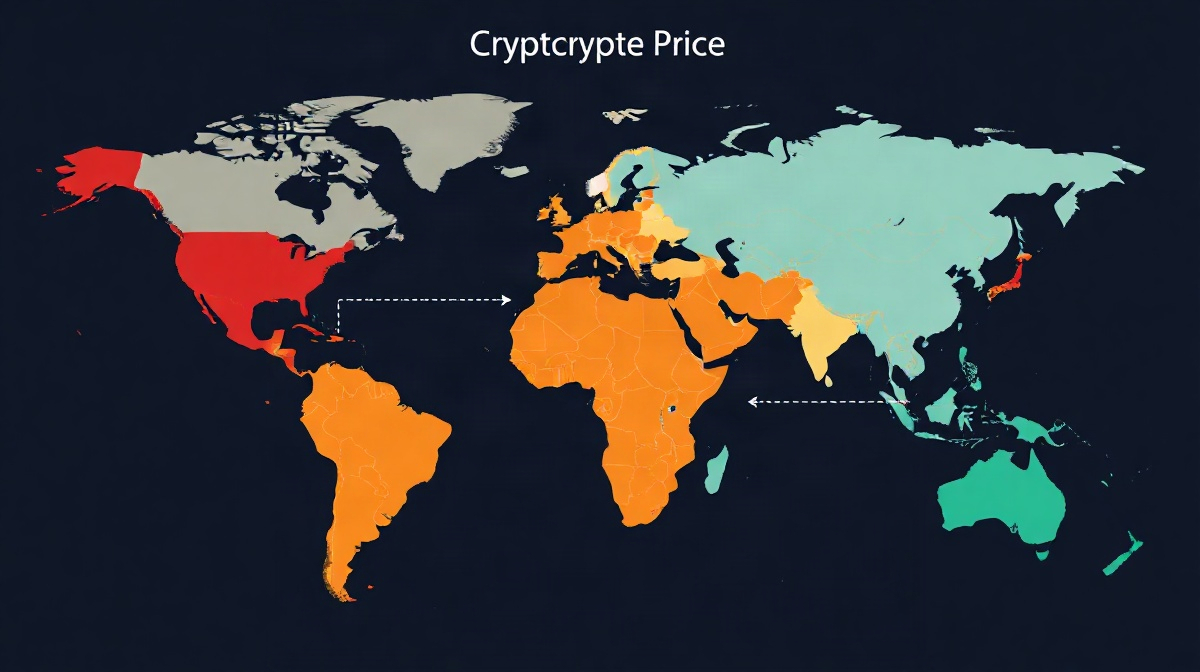
Regional price gaps. In countries with capital controls, high inflation, or restricted access to foreign currency, crypto often trades at a premium on local p2p platforms compared to the global exchange rate. Traders who can source crypto cheaply in one region and list it for sale in a premium region can capture that regional arbitrage opportunities consistently.
Payment method premiums. Within a single country, prices can vary by payment rail. A seller accepting instant bank transfer might price USDT lower than a seller who only accepts a specific e-wallet with higher reversal risk. Faster, lower-risk payment methods tend to clear at tighter spreads; riskier or slower methods carry a premium that a careful arbitrageur can capture.
Platform-specific liquidity. Liquidity isn't evenly distributed across platforms. Binance P2P might have deep liquidity and tight spreads for USDT/USD pairs, while a smaller platform in the same region might have thin liquidity and wider spreads. Comparing live prices across platforms — not just within one — is where most of the real arbitrage opportunities hide.
Because all three dynamics shift throughout the day, monitoring exchange rates in real time (rather than checking once and executing hours later) is essential for any serious p2p arbitrage strategy.
There isn't just one style of p2p arbitrage. Traders typically specialize in one of four approaches, each with a different risk and effort profile.
This is the simplest form: buying and selling on the same p2p platform, exploiting the spread between the cheapest active buy order and the highest active sell order for the same crypto/currency pair. Because everything happens inside one platform's interface, settlement and dispute resolution are consistent, which lowers operational risk — but spreads tend to be thinner since both sides of the trade see the same order book.
Here, the arbitrageur buys crypto on one p2p platform (say, Binance P2P) and sells it on a competing platform (say, OKX P2P or Bybit P2P) where the local price is higher. This requires maintaining verified accounts and deposit balances across exchanges, and comparing exchange rates across platforms continuously. Cross-platform arbitrage usually offers wider margins than intra-platform trades because liquidity pools don't talk to each other — prices on separate platforms can drift apart for hours.
Crypto priced in one local currency sometimes implies a different "effective" exchange rate once converted back to USD than the same crypto priced in another local currency. A trader comparing USDT/NGN pricing against USDT/EUR pricing, for instance, might find that converting NGN proceeds back to EUR at the real-world forex rate yields more crypto than trading directly. This type of arbitrage requires tracking both crypto prices and real-world currency exchange rates simultaneously.
The most advanced variant combines three legs: converting fiat A to crypto, crypto to fiat B, and fiat B back to fiat A through a forex channel or third p2p trade, aiming to end up with more of fiat A than you started with. This resembles classic triangular arbitrage in forex markets, adapted for crypto rails. It demands the fastest execution and the most careful bookkeeping, since three sequential transactions each introduce counterparty and timing risk.
Choosing the right platform (or combination of platforms) matters as much as the strategy itself. Liquidity, fee structure, and regional coverage vary significantly.
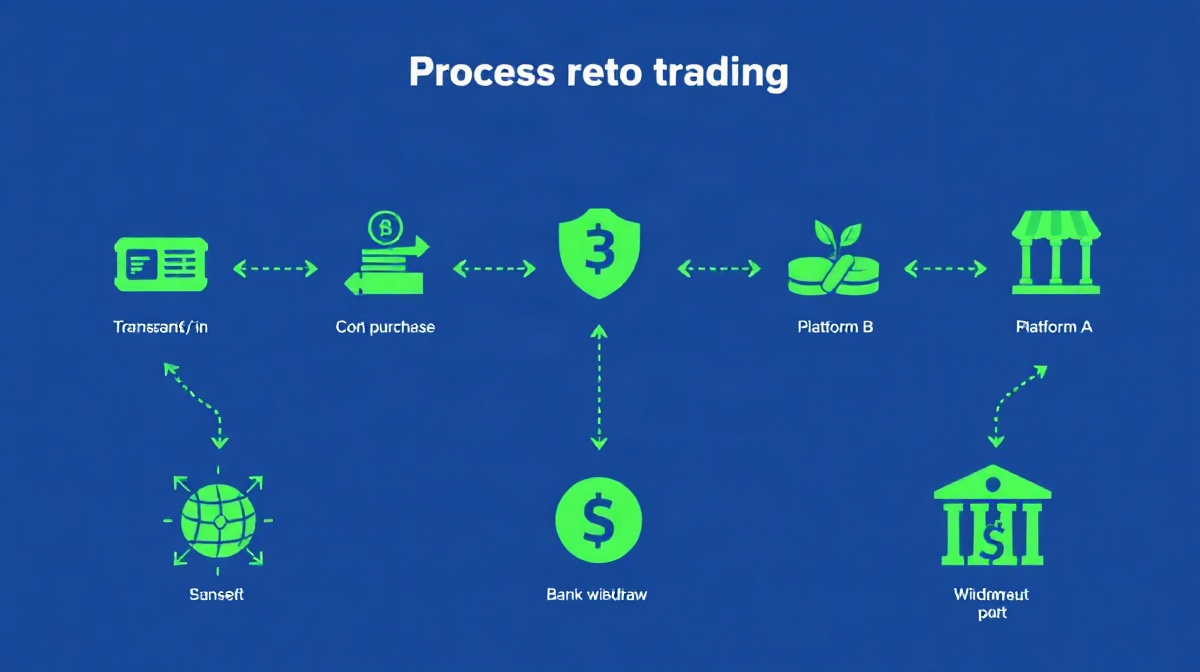
Each platform has its own merchant verification tiers, dispute processes, and withdrawal limits — read the fine print before committing larger amounts of capital. Binance P2P and OKX P2P are the two most commonly paired platforms for cross-platform crypto arbitrage because both offer deep liquidity in USDT and overlapping regional access, which makes comparing exchange rates between them straightforward.
Here's a practical walkthrough using a realistic USDT/local currency example.
Step 1: Identify the spread. Suppose on Binance P2P, USDT is being sold by a merchant at ₦1,620 per USDT (slightly below the "fair" market rate), while on a different p2p platform, buyers are actively bidding ₦1,660 per USDT for fast bank transfer settlement. That's a ~2.5% gap before fees.
Step 2: Check liquidity depth. Before committing capital, confirm that both the buy-side and sell-side orders can absorb your intended trade size without the price moving against you. A $5,000 trade against an order with only $1,200 of available liquidity will force you to split across multiple counterparties, which slows execution and increases exposure.
Step 3: Make the deposit and buy. Fund your p2p account (deposit fiat or transfer in existing crypto), then execute the buy order with the cheaper merchant, confirming payment through the platform's designated channel.
Step 4: Confirm the trade and release. Wait for the merchant to confirm receipt of fiat payment and release the USDT into your platform wallet. This step is where most disputes happen — always use the platform's official chat and payment confirmation tools, never off-platform communication.
Step 5: Transfer and sell. Move the USDT (if cross-platform) to your second exchange account, then post or accept the higher-priced sell order.
Step 6: Settle and reconcile. Once the second counterparty confirms payment and you release the crypto, reconcile your net profit after accounting for any network transaction fees, platform fees, and the time value of capital tied up during settlement.
On a $5,000 round trip with a 2.5% gross spread, that's roughly $125 in gross arbitrage profit per cycle — before transaction costs. Scaling this requires either larger capital per cycle or running multiple cycles per day, which is exactly where automation becomes valuable.
Manually refreshing order books across three or four platforms all day is not a scalable strategy. This is where p2p arbitrage bots and monitoring tools come in.
Monitoring bots continuously scan multiple p2p platforms and flag price gaps above a configurable threshold, letting traders react within seconds instead of manually refreshing pages. These bots typically poll each platform's public p2p API or scrape the order book interface at set intervals.
Alert systems push notifications — via Telegram, email, or in-app — the moment a spread crosses a profitable threshold, factoring in estimated fees so you're not chasing spreads that evaporate after costs.
Auto-trading bots go a step further, executing trades automatically once pre-set conditions are met. These require API access (where platforms support it) and carry higher operational risk, since an automated system can't verify a counterparty's reliability the way a human trader can when reading chat responsiveness or reputation history.
Most serious p2p traders run a hybrid setup: bots handle the monitoring and alerting across exchanges, while a human still makes the final call on execution, particularly on the fiat settlement side where reversal risk and counterparty trust matter most. Well-built bots also log historical spread data, which helps identify which currency pairs and time windows tend to produce the widest, most reliable arbitrage opportunities over time. Under the hood, most monitoring bots rely on fairly simple algorithms — polling intervals, threshold comparisons, and moving averages — rather than complex machine learning, since spread detection is a straightforward numerical comparison problem. More advanced trading operations layer in predictive algorithms that weight historical spread patterns by time of day and day of week, improving the odds that an alert fires on a spread that will still be open by the time you act on it.
Security deserves equal attention alongside speed. Because p2p arbitrage requires holding meaningful balances across multiple exchange accounts, security hygiene — unique passwords, hardware-key two-factor authentication, and withdrawal address whitelisting — is non-negotiable. A bot that catches every spread in the world is worthless if a security lapse on one of your linked accounts lets someone else walk away with the capital you need to execute trades.
Why does the same crypto asset sometimes cost noticeably more in one country than another? A few structural reasons explain most of the gap:
Banking restrictions. In countries where banks restrict or discourage transfers to crypto exchanges, demand for p2p on-ramps rises, pushing prices up relative to regions with easy banking access. Crypto becomes a release valve for capital that can't easily move through traditional channels.
Currency controls and inflation. In economies with capital controls or rapid local currency depreciation, residents often use crypto (especially stablecoins) as a store of value, driving persistent premium pricing on p2p platforms relative to the global dollar rate.
Local demand surges. News events, regulatory crackdowns, or sudden interest spikes in a specific country can cause temporary demand shocks that p2p prices reflect faster than centralized exchange order books, since p2p sellers reprice manually and often overreact to short-term sentiment.
Payment rail scarcity. Where only a handful of payment methods are supported (limited bank integrations, few mobile money options), liquidity providers can charge a premium simply because alternatives are scarce.
These regional gaps are the backbone of cross-platform and cross-currency arbitrage — and they tend to be more durable than exchange-to-exchange arbitrage gaps, since regulatory and banking friction doesn't disappear overnight.
P2P arbitrage carries risks that don't exist in order-book-to-order-book crypto arbitrage, because every trade involves a human counterparty and a fiat settlement leg.
Counterparty risk. A merchant can delay confirmation, claim non-receipt of funds, or simply be slow to respond. Always check a counterparty's completion rate, verification level, and trade history before committing to a trade.
Frozen accounts. Banks in some jurisdictions flag accounts that show frequent p2p crypto transfer patterns, sometimes freezing accounts pending investigation. Spreading fiat flows across multiple accounts and payment methods can reduce (though not eliminate) this exposure.
Payment reversals. Certain payment methods (especially card-based or some digital wallets) allow the payer to reverse a transaction after the seller has already released crypto. Favor payment rails with lower reversal risk, such as verified bank transfers, when trade size is large.
KYC and verification issues. Some platforms impose daily or monthly limits tied to verification tier. Hitting a limit mid-cycle can leave capital stuck mid-trade. Plan trade sizes around your verified limits in advance, not after you've already initiated a transaction.
Price slippage during settlement delays. Crypto prices move while fiat settlement is pending. A spread that looked profitable at order placement can shrink or flip negative if settlement takes longer than expected, particularly during high-volatility periods.
Even experienced traders fall into the same handful of traps:
Regulations around p2p crypto trading vary significantly by jurisdiction, and they change frequently. In most countries, profits from p2p arbitrage are treated as taxable income or capital gains, and tax authorities increasingly request transaction records directly from major exchanges. Keep detailed records of every trade — timestamp, counterparty, amount, price, and fees — since reconstructing a full year of p2p activity after the fact is far harder than logging it as you go.
Some jurisdictions also require registration or licensing for anyone trading at scale or acting as a merchant/liquidity provider on p2p platforms, since regulators may classify high-volume p2p activity as money services business activity. Before scaling beyond casual trading volumes, consult a tax professional or legal advisor familiar with crypto regulation in your specific country, since the line between "personal trading" and "regulated money transmission" differs widely across markets.
Spotting p2p arbitrage opportunities manually across five or six platforms, multiple currencies, and dozens of payment methods is not realistic without tooling. ArbiScreen was built to close that gap for crypto traders who need reliable, real-time visibility into spreads without juggling a dozen browser tabs.
ArbiScreen aggregates live spread data across major exchanges, giving traders a single dashboard view of where exchange rates and arbitrage opportunities are currently widest, instead of relying on stale screenshots or delayed third-party reports. Rather than manually comparing Binance P2P against OKX P2P against Bybit P2P one tab at a time, traders can scan consolidated data and immediately see which currency pairs and platforms are showing the most attractive spreads right now.
For traders building a repeatable p2p arbitrage strategy, this kind of real-time comparison tool turns an otherwise time-consuming manual process into something that can be checked in minutes, freeing up time to focus on execution, counterparty vetting, and risk management rather than endless tab-switching.